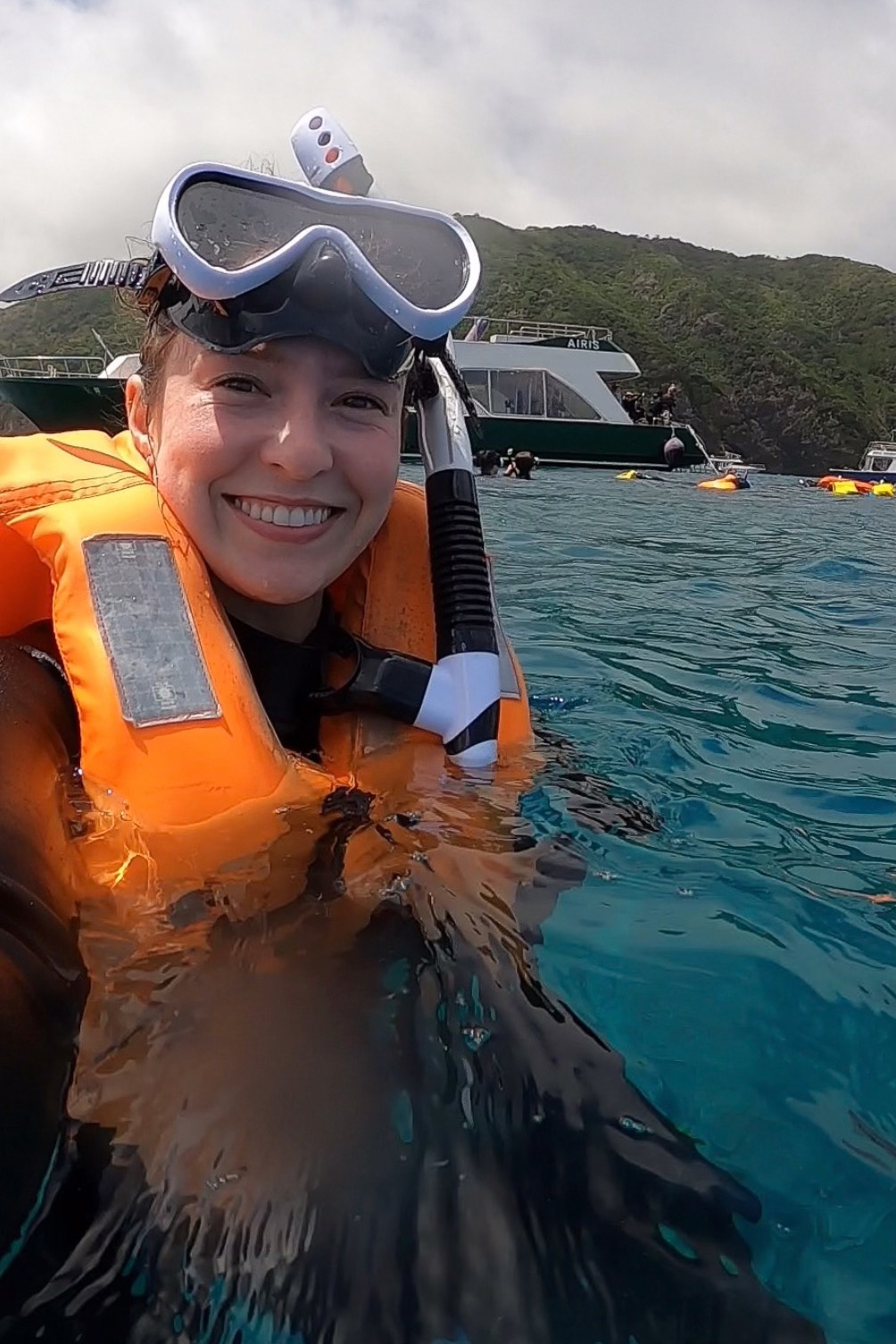
Second-year University of Iowa College of Dentistry student Ingrid Streitz helped revive a crew member during a snorkeling excursion in Japan, an experience that reinforced for her the importance of CPR training, access to AEDs, and being willing to act.
Story: Hannah Ossman
Photography: Jake Hannon and courtesy of Ingrid Streitz
Published: Sept. 21, 2026
Ingrid Streitz was on a snorkeling trip off the coast of Okinawa, Japan, when she noticed crew members suddenly running toward the front of the boat.
At first, the second-year University of Iowa College of Dentistry student thought someone might be seasick. Then she saw them grab an automated external defibrillator (AED).
“I knew something was seriously wrong,” Streitz says.
Streitz had worked as an emergency medical technician while attending St. Olaf College in Minnesota. Despite a language barrier, she stepped forward and tried to explain that she was trained to help.
After some persistence, they understood.
When Streitz reached the front of the boat, she found one of the crew members unconscious and not breathing. She tried to wake him with a sternal rub, but he did not respond. When she could not feel a pulse, she began CPR.
“I was totally nervous and honestly shaking at this point because it was a very intense situation and everyone was looking at me for what to do,” Streitz says. “I knew, though, that his best chance for survival was if I stayed as calm as possible.”
“When something happens, being willing to step in can make all the difference in someone’s survival,” Ingrid Streitz says.
Streitz directed another crew member to provide rescue breaths while she performed chest compressions. At the same time, another concern was running through her mind: They were far from shore, and the man needed immediate medical care.
“I remember thinking, ‘How are we going to get this man to the hospital? We are 45 minutes off the coast of Okinawa and he needs help now,’” she says.
Streitz told the crew they needed to contact the coast guard.
Then came another challenge: The AED was giving instructions in Japanese. Streitz relied on those around her to help interpret the device until it indicated that a shock was advised.
“When we stood away and clicked the button, the man jolted like you’d see in a movie,” Streitz says.
She immediately continued CPR. When she checked again, she found a pulse. Eventually, the man began breathing more regularly, although he remained unconscious.
The boat headed to nearby Tokashiki Island, where emergency medical personnel met them and transported the man by ambulance.
“I was so relieved that there was an AED on the boat, which I think was what saved his life,” Streitz says.
The next day, Streitz messaged the tour company and learned the man was alive and recovering.
The emergency called on skills Streitz had spent years developing — just not in a place she ever expected to need them.
Her interest in health care began early. She worked as a certified nursing assistant in high school, became a collegiate EMT, and later worked as a dental assistant before coming to Iowa.
Just months before her trip to Japan, Streitz had renewed her CPR training. The emergency in Okinawa reinforced her belief that those skills matter far beyond a classroom or clinic.
“When something happens, being willing to step in can make all the difference in someone’s survival,” Streitz says.
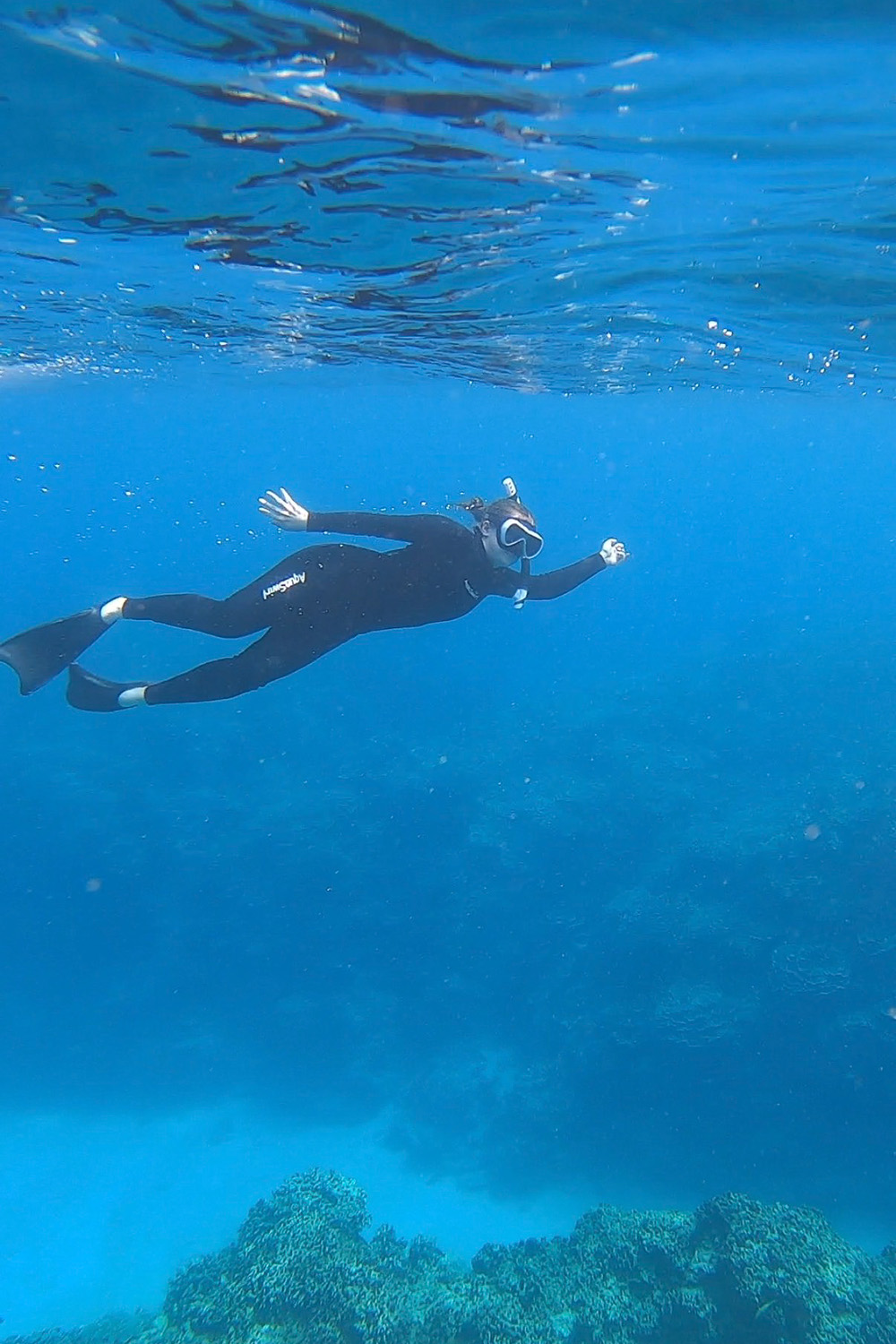
University of Iowa dental student Ingrid Streitz was able to enjoy her planned snorkeling excursion after stepping forward to help a crew member in cardiac arrest.
Although her EMT experience helped her take charge, Streitz says much of what she did relied on CPR skills anyone can learn. Seeing the difference those skills can make has even led her to consider becoming a CPR instructor.
“I got to see firsthand how impactful this training is,” she says.
Streitz emphasized two takeaways from the incident: the importance of making AEDs readily available and people being willing to act.
“Even if you’re scared, you can do it,” she says.
Her willingness to help extends beyond emergency medicine. She teaches suicide prevention and Mental Health First Aid programs and hopes to continue that work in her dental career by teaching dentists, dental hygienists, assistants, and staff about general mental health and suicide prevention.
“I think it is important for dental providers to be aware of these challenges because we often see patients more frequently than primary care providers do and can catch subtle behavioral warning signs,” Streitz says. “Oral hygiene can easily go down the drain when someone is struggling.”
Streitz is leaning toward general dentistry but is keeping an open mind about specialties.
“Connection is really important to me and taking action even when you’re nervous,” Streitz says.
After the crew member was transferred to an ambulance on small Tokashiki Island, the snorkeling excursion continued. Streitz returned to the water, saw fish and a sea turtle, and tried to process what had happened only minutes earlier.
It was a surreal ending to a day that had taken her much further outside her comfort zone than she expected.
And, as Streitz notes, “I still got to snorkel.”