
Five years after a screening test found early-stage lung cancer, and a robotic procedure removed the tumor, a former smoker remains free from cancer.
Story: UI Health Care Marketing and Communications
Photography: Liz Martin
Published: Nov. 20, 2025
Sharon Chamberlin was vigilant about her annual lung cancer screening. Though she’d quit smoking after three decades, Chamberlin’s risk of developing lung cancer was high. Cigarette smoking is the No. 1 risk factor for lung cancer, according to the U.S. Centers for Disease Control and Prevention.
In late summer 2020, Chamberlin’s lung cancer screening — a CT scan of her chest — identified a suspicious nodule on her left lung. A needle biopsy confirmed her diagnosis: early-stage, non-small cell lung cancer.
“I didn’t have any symptoms,” says the 73-year-old retired nurse from Waterloo, Iowa.
Chamberlin’s local doctor referred her to cardiothoracic surgery specialists at University of Iowa Health Care.
“If I had to have surgery, I’d want them to do it,” she says. “It’s the only place I would go.”
Team-based, patient-specific approach to lung cancer surgery
At UI Health Care, Chamberlin met cardiothoracic surgeon Evgeny Arshava, MD, who explained that surgery was her best option.
“In most [otherwise healthy] patients, surgery provides better control of early-stage lung cancer than radiation,” Arshava says.
UI Health Care is home to the most comprehensive cardiothoracic surgery program in Iowa, providing the full range of care — from the most common operations to lung transplantation, Arshava notes. Because some patients travel long distances, and from out of state, an initial clinical evaluation is often combined with a pre-operative visit for patients’ convenience.
“We have a multidisciplinary team that includes medical oncologists, pulmonologists, radiation oncologists, nurses, and surgeons who specialize in cardiothoracic surgery,” Arshava says. “We review and discuss complex patients with lung cancer in a multidisciplinary conference to make sure we take the best approach to treating each patient.”
Robotic lung surgery expertise, experience at UI Health Care
Some patients, depending on the stage and location of their cancer and their medical history, are eligible for robotic lung cancer surgery. With a robotic procedure, surgical cameras and instruments are attached to a robot that the surgeon controls from a console in the operating room.
“We fit the operative approach to each patient,” Arshava says. “Some patients still need other surgical approaches, including traditional ‘open’ operations. But for many patients, like in Sharon’s case, robotic surgery is a viable option that provides improved visibility and precision.”
UI Health Care has a track record of proven success with robotic lung cancer surgery, which is becoming the standard of care in the U.S., says Kalpaj Parekh, MBBS, professor and chair of the UI Department of Cardiothoracic Surgery.
“Across our health system, we’ve offered a range of robotic procedures — in cardiothoracic surgery as well as urology, gynecology, acute care, bariatrics, and other surgical areas,” Parekh says. “UI Health Care surgeons are often at the forefront of advances in surgical techniques and technologies. In fact, Iowa has been at the forefront of adopting robotic technology for complex thoracic procedures since the robotic platform became available. The goal is always to provide outstanding outcomes for patients that include faster healing, less pain, and shorter hospitalizations.”
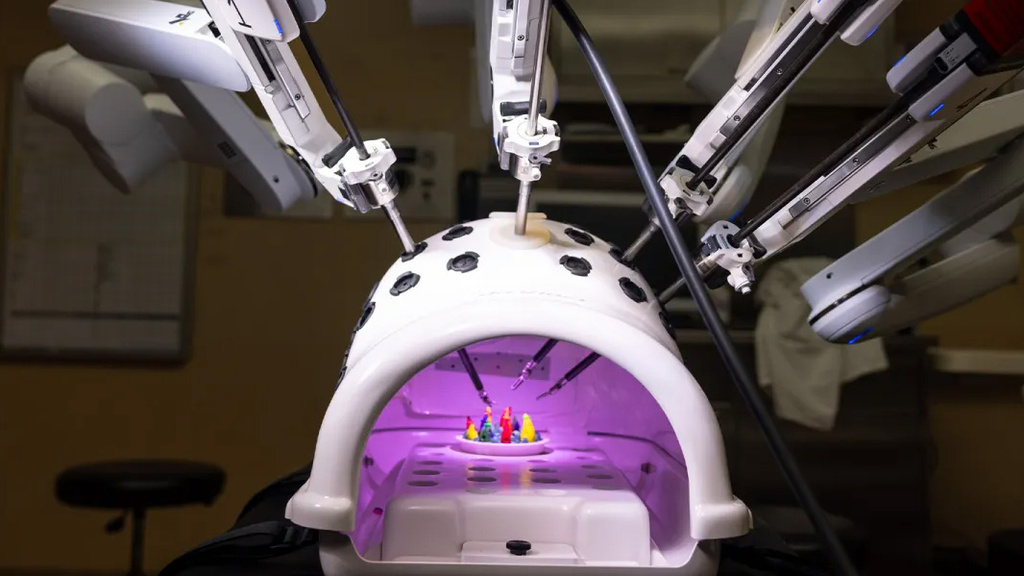
UI Health Care adds new robotic assisted surgical systems
Three new da Vinci surgical systems are first in Iowa and will enable around 1,000 additional robotic-assisted minimally invasive procedures at UI Health Care each year.
Cardiothoracic surgery during COVID with patient safety in mind
Chamberlin, who as a nurse had taken care of many patients recovering from lung surgery, now faced the prospect of her own procedure.
“I was apprehensive,” she says, “but knew I had to do something to get rid of it.”
Complicating matters was the COVID-19 pandemic, which was at its height at the time of her surgery. While many other health systems decreased or canceled elective operations during the pandemic, UI Health Care’s cardiothoracic surgery team continued treating patients.
“We knew that for some patients, delaying care could give cancer more time to spread, making it more difficult to remove and more likely to return,” Arshava says. “With the appropriate COVID-19 safety measures in place, we were able to proceed without decreasing or canceling lung cancer surgeries at UI Health Care.”
Benefits of robotic surgery include faster recovery, shorter hospital stay
Chamberlin’s robotic-assisted surgery — a left lower lobectomy and mediastinal lymph node dissection to remove the lower half of her lung and associated lymph nodes — took place the first week of September 2020. Removing lymph nodes is a routine part of lung cancer surgery, and fortunately, no cancer was found in Chamberlin’s lymph nodes. Arshava extracted Chamberlin’s cancer through small incisions in her chest between her ribs. The robotic approach provides improved visualization during some stages of lung operations as well as technical advantages during the removal of lymph nodes.
Chamberlin was discharged from the hospital just three days after her procedure. A shorter hospital stay is one of the key benefits of robotic surgery.
As the cardiothoracic surgery team has performed more procedures using a robotic system, the average length of stay for these patients has been reduced by one to two days, Parekh notes.
“As robotic surgeries become even more common, and as the technology continues to improve, more patients will become good candidates for this approach,” he says.
"We fit the operative approach to each patient. Some patients still need other surgical approaches, including traditional ‘open’ operations. But for many patients, like in Sharon’s case, robotic surgery is a viable option that provides improved visibility and precision."
The value of lung cancer screenings
For the first two years after her surgery, when the cancer was most likely to recur, Chamberlin had a check-up and lung screening with Arshava every six months. After that, she visited once a year.
Once a patient is considered cured from lung cancer, they can return to annual lung cancer screenings, says Arshava, who emphasizes the importance of screenings for early detection and post-surgery follow-up.
“All smokers need lifelong lung cancer screening, even if their initial cancer is cured, as the remaining lungs are still at risk for new cancer development,” he says. “Lung cancer screening is a very effective way to detect early-stage lung cancer.”
And the earlier cancer is detected, the easier it is to deal with and the higher chance of a cure.
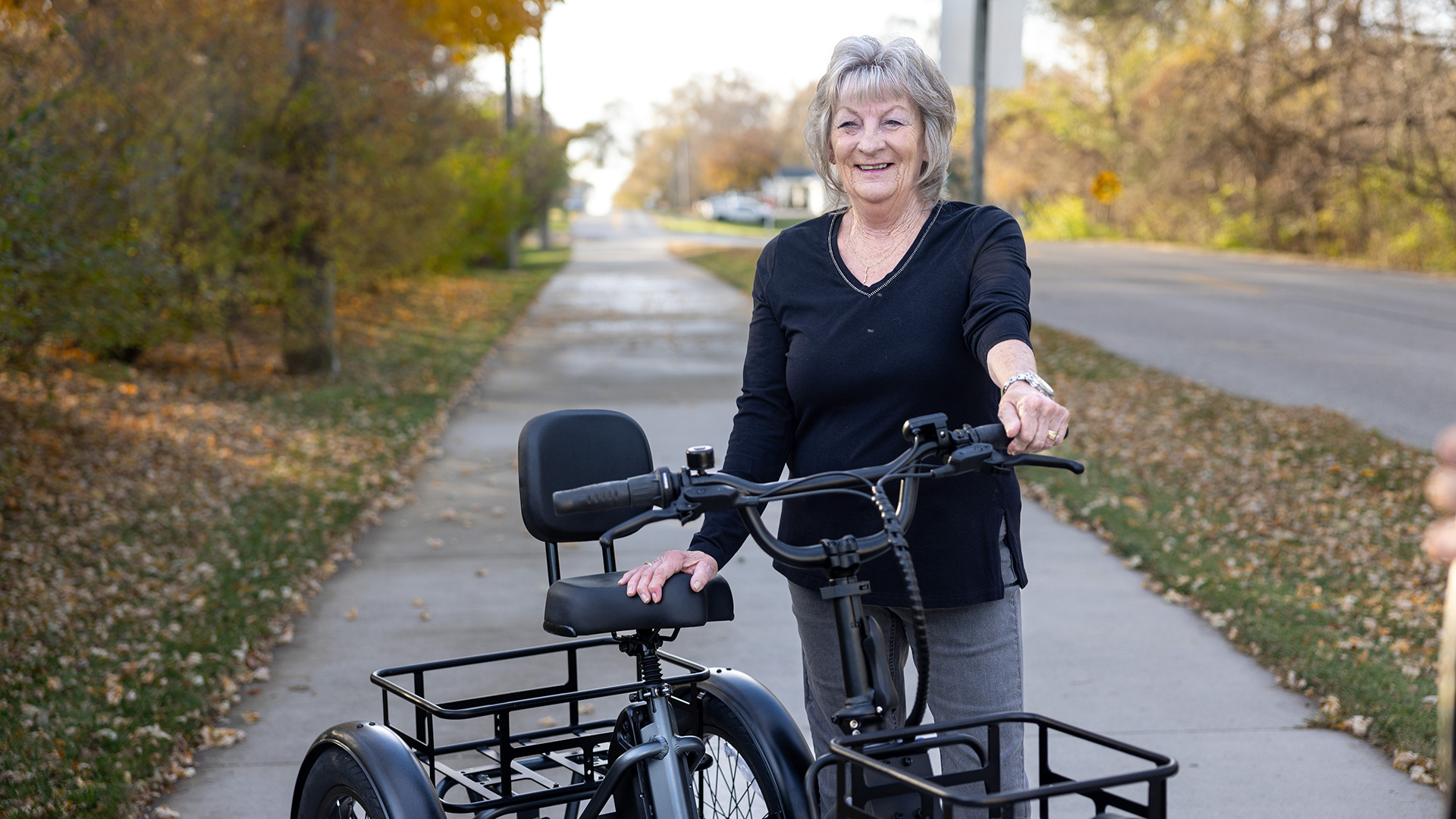
Sharon Chamberlin was discharged from the hospital just three days after her procedure. A shorter hospital stay is one of the key benefits of robotic surgery.
Cured of lung cancer
By the first week of September 2025 — exactly five years after her operation — Chamberlin’s cancer had not returned. Lung cancer is considered cured if it doesn’t recur within five years, according to Arshava.
This news was “a big relief,” says Chamberlin, who enjoys spending time with her husband, two children, three grandchildren, and three great-grandchildren.
She adds that she plans to continue her annual lung cancer screenings.
“I really recommend it. Do the appointments and follow-ups when your doctors want them done,” Chamberlin says.