The Des Moines Area Medical Education Consortium equips medical students with real-world clinical experience in a care setting vital to Iowa communities.
Story: Celine Robins
Published: June 18, 2026
For decades, the Des Moines Area Medical Education Consortium has shaped the careers of University of Iowa Carver College of Medicine students. Between the popular core year program — a yearlong series of required clinical rotations where students gain hands‑on experience in multiple specialties — and nearly two dozen advanced clerkships, around 80 UI medical students rotate through the Des Moines campus per year. Their glowing reviews reflect the group’s commitment to hands‑on experience, community building, and personalized mentorship.
This summer, longtime director Ken Cheyne (82MD) passed the baton to fellow alumnus Tyler Schwiesow (03MD). As Cheyne reflects on his tenure and Schwiesow steps into the role, their perspectives highlight the enduring value of this unique training opportunity and its impact on generations of Carver College of Medicine students.
Real-world learning
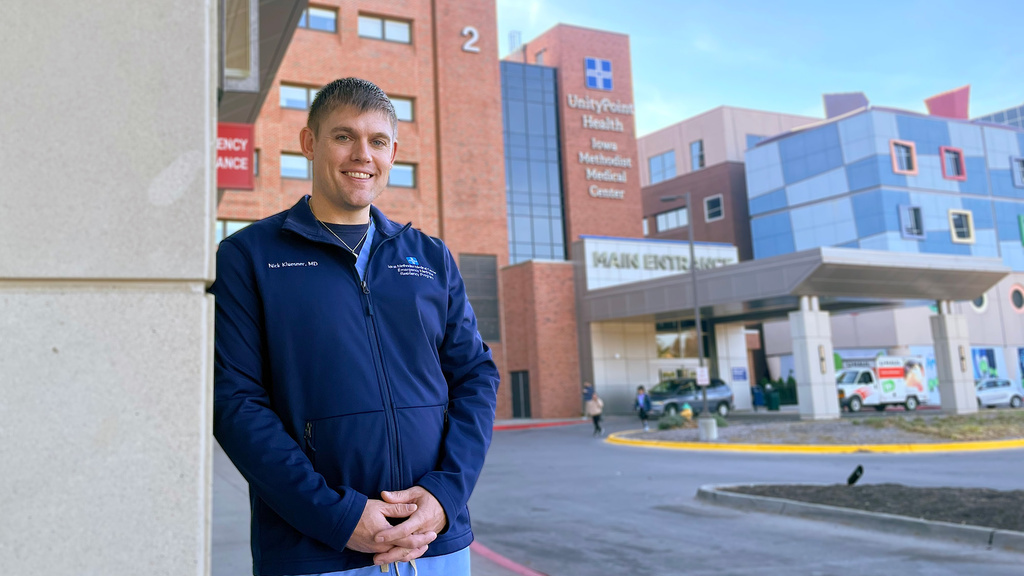
Unlike many community-based branch campuses, the Carver College of Medicine’s Des Moines campus is in the heart of Iowa’s largest metropolitan area. Students complete their clerkships across three partnering health systems — UnityPoint Health–Des Moines, Broadlawns Medical Center, and the Des Moines Veterans Affairs Medical Center — along with outpatient clinic sites.
“It’s truly a group of institutions coming together to support medical education here,” Schwiesow says.
The result is a training environment that shows students the breadth of Iowa’s health care landscape. Students care for patients coming from Des Moines and patients traveling from rural communities to receive specialized care. That diversity of practice translates directly into clinical learning.
“At those different hospitals, students get to see the social determinants of health each and every day,” Cheyne says. “They see the challenges that people from rural areas face to receive health care that's not available in their communities. They see patients receiving care through interpreters. It's an opportunity to see something different.”
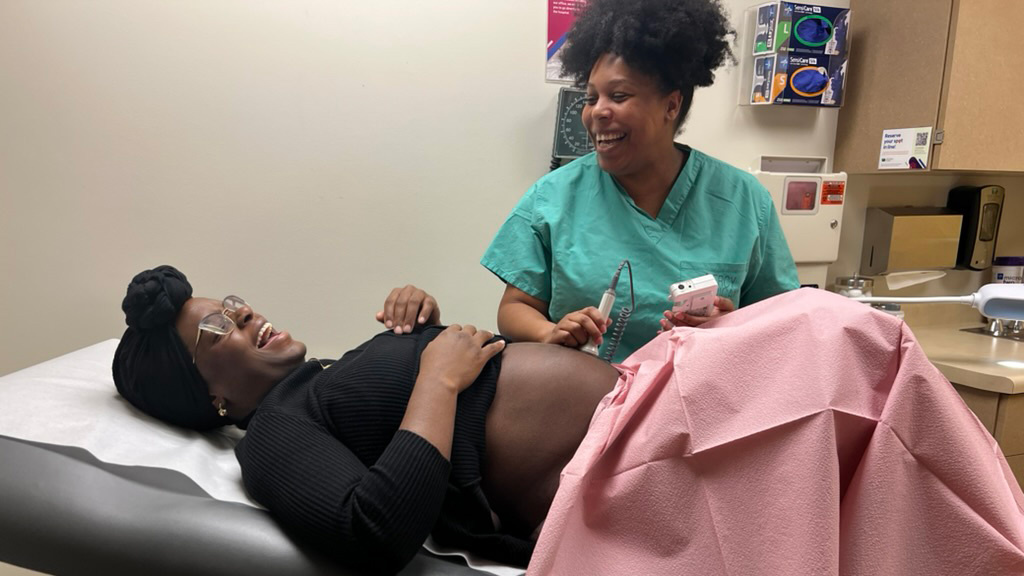
When you combine the bed count of each of the training sites, the number is comparable to that of the UI Health Care university campus, Schwiesow says — yet with far fewer residents and learners. For students, that means more direct involvement in patient care, more one on one teaching, and more chances to manage complex cases.
“I think there’s only been a single two week period that I ever went without seeing something I’ve never seen before,” Schwiesow says of his time leading the inpatient teaching service.
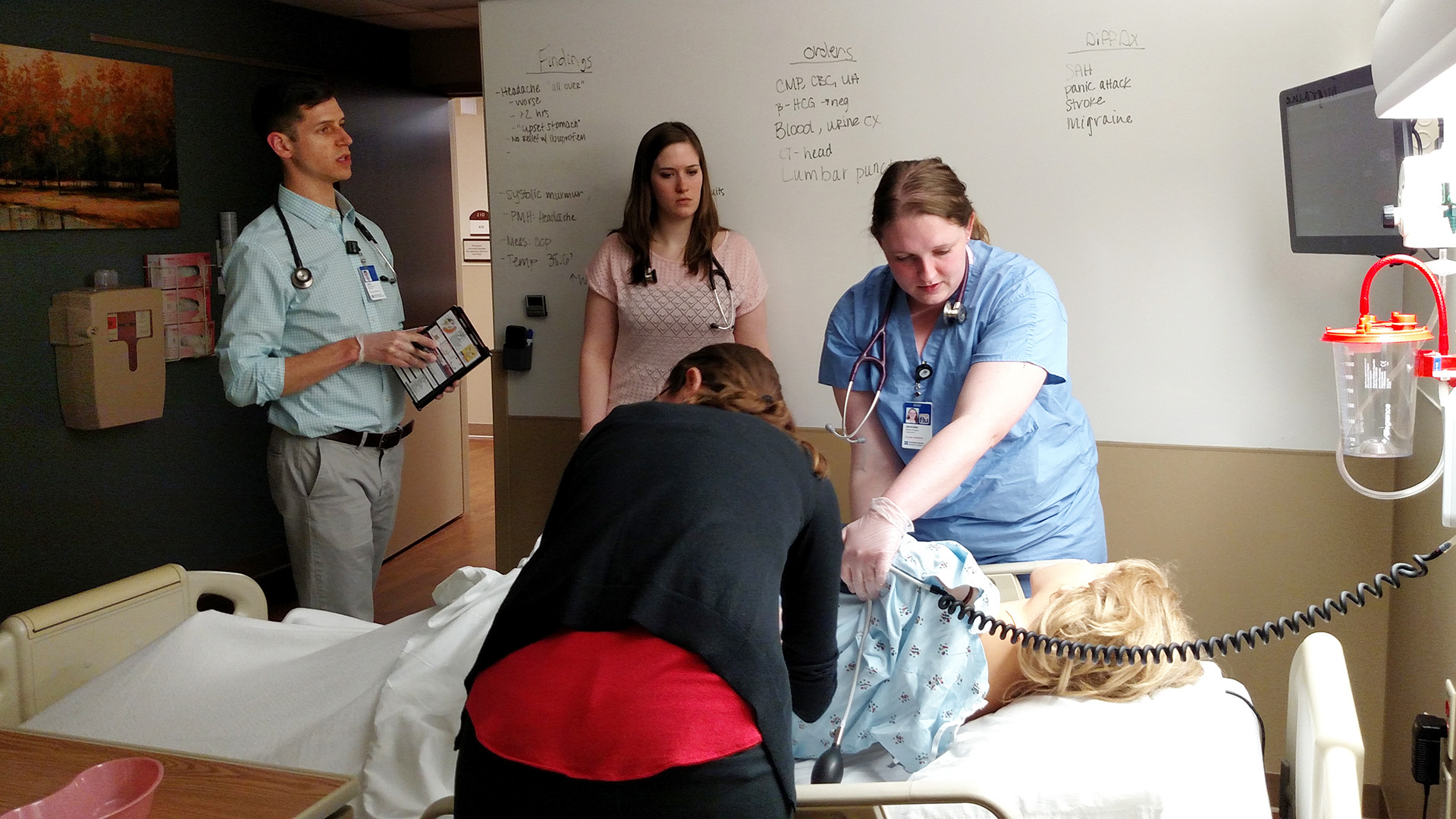
Three students practice advanced cardiac life support with a simulated patient in the Dorner-Villeneuve Simulation Education Center at Iowa Methodist Medical Center in Des Moines.
Iowa impact
Students are often surprised by how different the clinical experience feels compared to the UI Health Care’s university campus — and how having exposure to both training sites broadens their educational horizons. Because of the university campus’ reputation as a regional referral center for tertiary care, patients seen there are often already a few steps into their health care journey.
“But in the clinic here in Des Moines, patients are more likely to present with a primary problem,” Cheyne says. “Students get to see the differential diagnosis before the workup has started.”
That perspective helps prepare students for the bread-and-butter practice of community-based primary care across Iowa. Cheyne notes a recent uptick in the number of Des Moines-trained students interested in family medicine and general internal medicine, both vital to addressing the need for primary care providers in rural Iowa.
And the impact extends beyond residency training, which refers to the medical specialty programs the graduates begin after earning an MD.
“I think there are six fairly recent Iowa students who I know did rotations here, went and did residency elsewhere, and then came back to practice here,” Schwiesow says. “A lot of folks stick around.”
The benefits of a small cohort
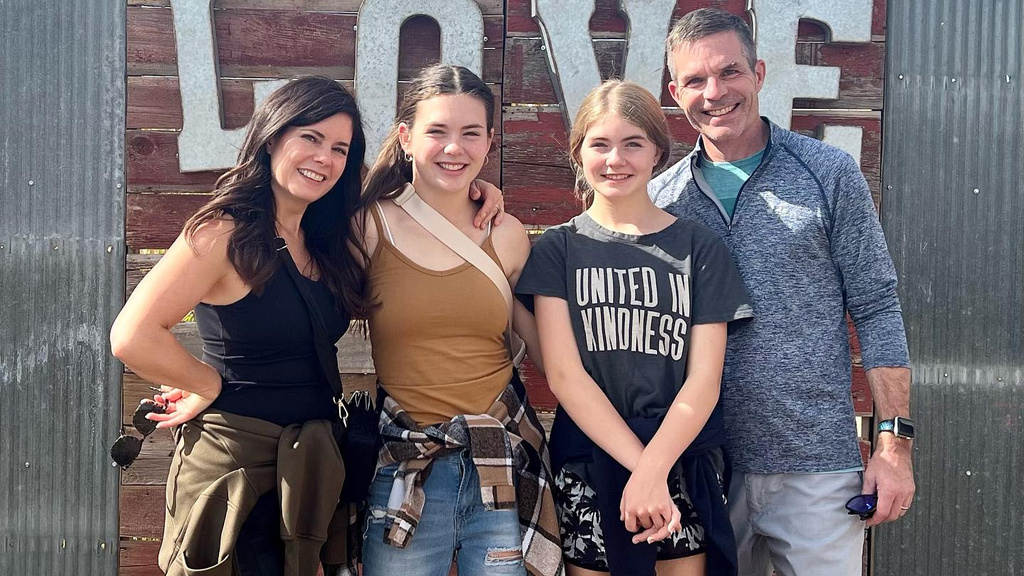
The smaller size of the student cohort leads to lasting friendships between those who rotate in Des Moines. The program provides free housing in the heart of downtown Des Moines to the 24 students per year who spend their entire core clerkship year there — resulting in a level of camaraderie. The cohort has a shared common space and attends social and cultural events — from hockey games to visiting a farm that raises mini Highland cattle. The close bonds they build provide support through the intensity of clinical training.
“It’s an opportunity to really get to know a smaller grouping of your colleagues,” Schwiesow says.
“We work really hard to make sure this group of students develops together as a team,” Cheyne says. “Medicine is complex. All of us are going to be parts of teams. So, learning how to be a good team member is a really important skill.”
Medical students also praise the additional learning opportunities afforded by the smaller cohort.
“It’s a different learning opportunity because they let the med students do a lot more,” says Kevin Chen (25MD), who is now in internal medicine residency training at UnityPoint in Des Moines. “At that point in my training, doing a lot more was the best for me because I learn best with hands-on experiences.”
An unbroken chain of alumni leadership
Leadership of the Des Moines branch campus has passed from one Iowa medicine alum to another for 50 years, starting with Nathan Josephson (71MD, 74R, 76F), followed by Steven Craig (79MD), then Cheyne. With the hand-off from Cheyne to Schwiesow, that tradition remains.
Schwiesow completed much of his own core year in Des Moines. He later served as program director for the internal medicine residency. He takes pride in giving back to the program that prepared him for a career he loves.
For Cheyne, the most meaningful part of his tenure has been watching students grow.
“Having students come in at the beginning of their core year feeling like they're never going to make it, and then at the end, seeing all the skills they've learned — it’s so rewarding,” he says.

(From left) Christopher Cooper, MD, FACS, FAAP; Tyler Schwiesow, MD; Amal A. Shibli-Rahhal, MD, MS, MME; and Ken Cheyne, MD, FAAP, gather at Cheyne’s retirement event. University of Iowa alums have led the Des Moines branch campus for decades; Schwiesow will continue the streak of Hawkeye leadership.
Schwiesow is focused on maintaining the campus’ culture of excellence while preparing students for a time of rapid evolution in health care delivery. He hopes to expand training in point‑of‑care ultrasound, simulation, and emerging technologies.
“The world of medicine is fundamentally changing in so many ways,” he says. “I want to make sure that we continue to partner with UI Health Care to prepare students for their future careers as much as we are for the current state of medicine.”