Grace Lidgett breathes easier, thanks to revolutionary science that transformed the fatal disease into a manageable condition for most people.
Story and videography: UI Health Care Marketing and Communications
Photography: Liz Martin
Published: Dec. 3, 2025
From the moment she took her first breath, Grace Lidgett’s life was shaped by a silent struggle. Diagnosed as a child with cystic fibrosis (CF), a genetic condition that causes thick, sticky mucus to build up in the lungs and other organs, she’s never taken breathing for granted.
So, when she signed up for track and field in seventh grade with dreams of becoming a long-distance runner, she was encouraged to stick to shorter distances because the physical strain would be too much.
But Lidgett, 20, has a habit of defying expectations.
“I had a lot of people tell me that my circumstances wouldn't let me excel at the things I wanted to pour my heart into,” she recalls. “To that I said, ‘Watch me.’”
Lidgett’s fierce determination and refusal to accept limitations define her approach to life. With unwavering support from her family, she’s never accepted anything less than life on her own terms.
Today, thanks to a groundbreaking treatment developed through research at the University of Iowa, led by physician-scientist Michael Welsh, MD, professor of internal medicine, Lidgett’s future is filled with opportunities to not only defy expectations but redefine them.
Hear from Grace Lidgett in Breath by Breath: Living With Cystic Fibrosis, a documentary film about how research and collaboration at Iowa changed our understanding of the disease — and changed the lives of patients.
An overwhelming diagnosis
When Lidgett was 6 months old, her parents, Amy and Tony Lidgett from Traer, Iowa, noticed she was struggling to grow. Their pediatrician offered suggestions and monitored her progress, but by her first birthday, Lidgett still hadn’t gained enough weight. She was referred to University of Iowa Health Care Stead Family Children’s Hospital to be evaluated for failure to thrive, a diagnosis for children whose weight is significantly below average.
It was during this testing that Lidgett was diagnosed with cystic fibrosis, a condition that was considered a fatal childhood disease for decades.
“It was very scary at that moment,” Amy Lidgett says. “When you hear your child has a genetic disease you’re not familiar with, all the sirens go off. It was overwhelming. A new normal started for us that day.”
This new normal included a strict regimen of medications, percussive treatments, and respiratory therapies. However, the Lidgetts were determined to give their daughter a full and rewarding life.
“They raised me like any other kid, just with more precautions,” Grace Lidgett says. “They never told me I was too sick for something. They had every faith in me, so I could have faith in myself.”
But even with her parents' support and her determination, Lidgett struggled to confront the severity of her condition.
“In eighth grade, I looked up the average lifespan of someone with CF, and one article said 32 years old,” she says. “I had all these big ambitions, like college, marriage, and kids, and I realized I was already halfway done. I hadn’t even started my life. I was devastated.”
It felt like her race had just begun, and yet the finish line was far too close.
New hope in a new therapy
It was around this time that Lidgett began taking Trikafta, a new, triple-combination drug therapy that targets the underlying cause of CF. Whereas previous medications and treatments had focused on alleviating the disease symptoms, Trikafta offered something Lidgett and her parents had always hoped for: the possibility of a life filled with possibilities.
“When I got to Trikafta, I understood what it meant for my future and my lifespan, and doing the things I loved,” Lidgett says. “I wasn’t afraid anymore. A world of opportunity opened up, and I didn’t have a second to waste.”
Working closely with her care team, Lidgett gradually replaced lifelong treatments with the new medication. The results were life-changing.
“She’s on drugs that are actually changing the way her cells work,” Amy Lidgett says. “These advancements have changed the trajectory of her life.”

Scientific breakthroughs grown in Iowa
Behind Lidgett’s progress is a story of scientific discovery that began decades ago at Iowa.
Cystic fibrosis is caused by mutations in the CFTR gene, which produces a protein essential for maintaining thin, free-flowing mucus in the lungs and other organs. In the early 1990s, Welsh and his team at Iowa discovered that the CFTR protein functions as a chloride ion channel and showed how mutations disrupt its folding and function. Crucially, they demonstrated that these mutations could be corrected in the lab.
Building on this research, Paul Negulescu, PhD, senior vice president at Vertex Pharmaceuticals, and his team developed a new class of drugs called protein-folding correctors that help restore CFTR function. Trikafta is one of these medications.
Thanks to these breakthroughs, CF has shifted from a fatal disease to a treatable condition. Modern therapies now target the root cause, improving both life expectancy and quality of life for a majority of CF patients.

A life redefined by research
For Lidgett and her family, the work of Welsh and Negulescu means more than scientific progress. It means hope and the chance to chase dreams once considered out of reach.
“I could never thank anybody enough for putting a lifetime’s worth of work into giving people they don’t even know an opportunity to live,” Lidgett says. “It’s beautiful, and I’m forever grateful.”
She is also committed to paying it forward. As soon as she was eligible, Lidgett joined research studies to help improve CF treatments.
“Research means opportunity,” she says. “We still have the chance to add years to people’s lives by continuing research, understanding its impact, participating in it, and recognizing the people behind it.”
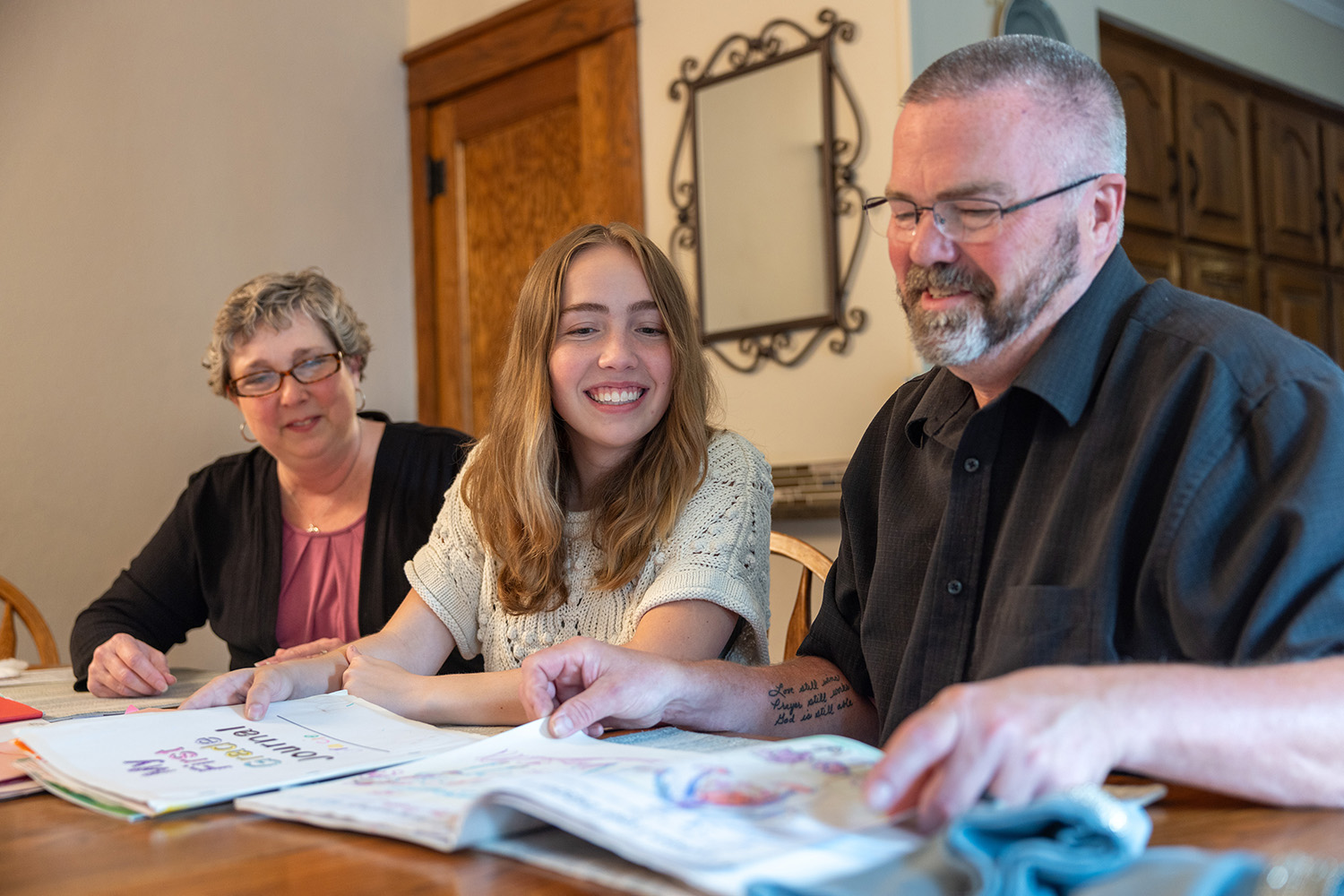
Grace Lidgett sits with her parents, Amy and Tony Lidgett.

In high school, Grace Lidgett was an 11-time state qualifier and a five-time state medalist, and she holds her school’s 5K record.
The space to breathe
Today, Lidgett is living out the big ambitions she once feared she would miss. She attends college in Indiana and continues to redefine her life with CF.
“This is the only life you get, and you have to live it whether you’re scared, sick, or healthy,” she says. “You have one opportunity.”
Lidgett also continues to excel at the things she loves, including running. In high school, she was an 11-time state qualifier and a five-time state medalist, and she holds her school’s 5K record.
Now, running has become a way to remind Lidgett of the power of putting one foot in front of the other and her ability to conquer everything she was told that she couldn’t do. Because for her, breathing is more than an action — it’s a triumph.
“It’s almost a symbol of determination and defiance,” Lidgett says. “To take a full breath and fill my lungs with air, rather than illness, means everything.”
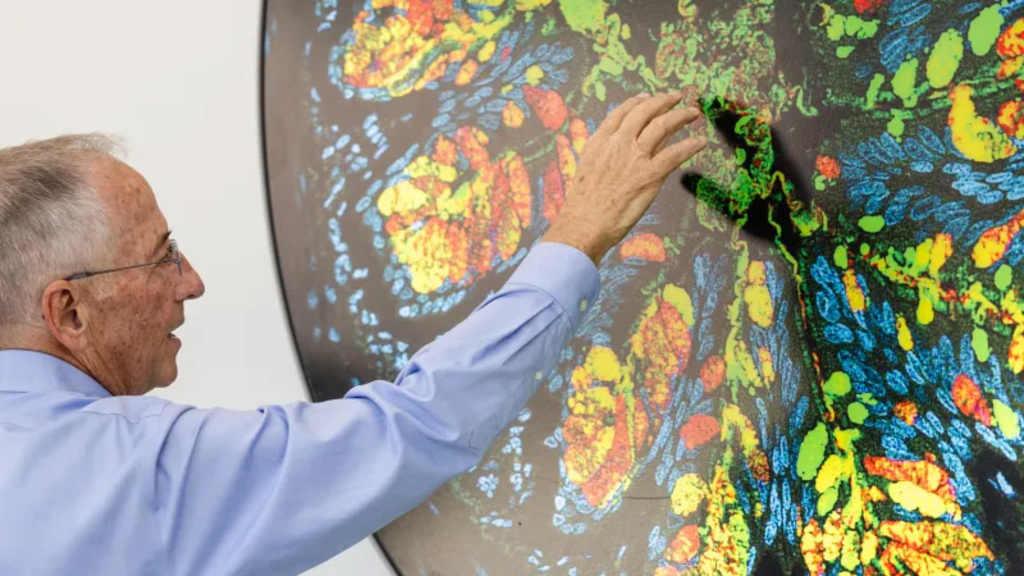
CF research at Iowa
Through almost five decades of persistence, collaboration, and curiosity, University of Iowa researchers have helped transform cystic fibrosis (CF) from a fatal childhood illness into a manageable condition for many — changing lives and redefining what’s possible in medicine.