Nick Lembezeder says his education in public health and medicine at the University of Iowa is preparing him well to reach his goals — while also helping to fill a physician shortage in the state.
Story: Sara Epstein Moninger
Photography: Liz Martin
Published: Aug. 25, 2026
Growing up in eastern Iowa, Nick Lembezeder learned that caring for a rural community means more than treating illness.
It means knowing your neighbors by name, seeing your patients at the grocery store or church, and truly understanding the challenges they face before they walk into the clinic.
Today, the third-year University of Iowa Carver College of Medicine student from Peosta is planning to return to those same communities as a physician. In fact, practicing medicine in Iowa is his top priority.
“I want my career to consist of working with, and giving back to, this place and the people that made me who I am,” Lembezeder says. “I want to walk down the street and wave at my neighbor, whose uncle I take care of. That’s just how I see my life going.”
With rural Iowa communities facing physician shortages, hospital closures, and growing health care needs, the University of Iowa is focused on giving students like Lembezeder opportunities and experiences to practice where they’re needed most. Through coursework, community-based clinical training, and mentorship from physicians already serving rural Iowa, the university helps students develop strong clinical skills and an intimate appreciation for the communities they hope to serve.
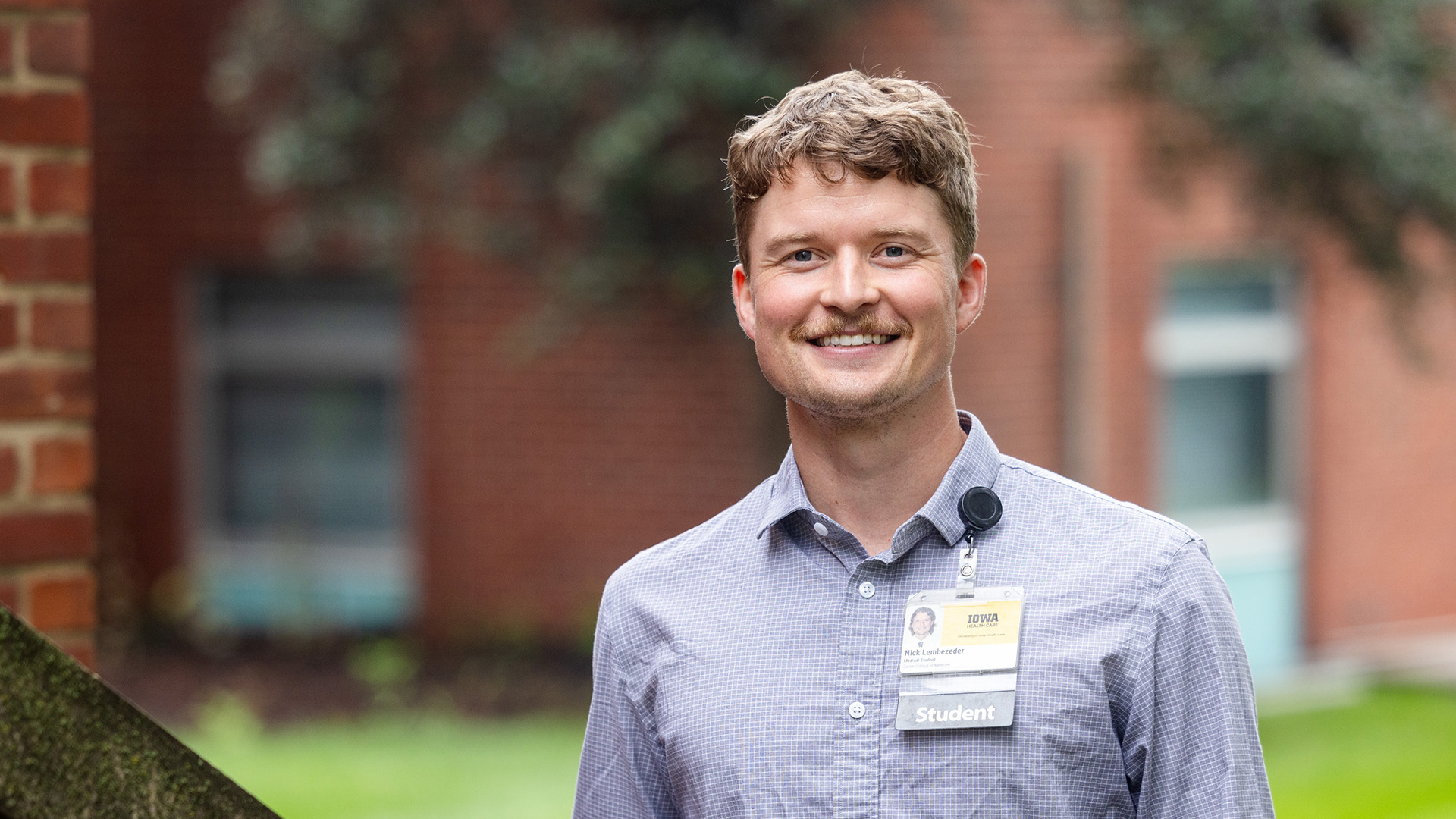
In the fall of 2026, Nick Lembezeder will complete a monthlong family medicine rotation in Decorah, Iowa. He looks forward to working alongside a physician whose career he plans to emulate.
For Lembezeder, that preparation began before medical school.
After earning a bachelor’s degree at Luther College, he enrolled in the University of Iowa College of Public Health, where he says his understanding of medicine expanded beyond the walls of a clinic.
“My public health education has given me a more holistic perspective,” he says. “Medicine isn’t just about the individual you’re treating. It’s a broad field that influences so much more.”
His coursework in public health exposed him to epidemiology, health policy, Medicaid programs, and community resources and has influenced the way Lembezeder approaches medicine.
“Having that broad education and knowing what resources are available to community members will help you make your community healthier,” he says.
That knowledge, Lembezeder believes, is especially valuable in rural Iowa, where hospitals often operate with fewer staff members and fewer support services than larger medical centers.
“In a rural area, you likely don’t have 10 social workers staffed at your hospital for consultation,” he says, “so a physician knowing what’s available for patients and families can make a real difference.”
Preparing for rural practice
While earning a master’s degree in public health, Lembezeder co-founded the Student Association for Rural Health, which brought practicing rural physicians to campus to speak with students interested in community medicine. Hearing firsthand about practicing in Iowa’s smaller communities helped affirm his career goals and introduced him to potential mentors.
Medical school has reinforced that broader perspective. Lembezeder is completing his core clinical rotations through the UI Carver College of Medicine’s Des Moines branch campus, where students train in community hospitals throughout central Iowa and are exposed to practice settings outside a major academic medical center.
The experience, Lembezeder says, has given him a deeper understanding of the kind of practice he hopes to build. “I can’t sing the praises of the Des Moines branch campus more highly. It’s shown me what community practice looks like in Iowa.”
Completing clinical rotations in community hospitals often allows students to work more closely with attending physicians and patients, providing additional opportunities for hands-on learning and one-on-one mentorship.
Medical training beyond Iowa City
The Des Moines Area Medical Education Consortium Inc. has been recognized as the regional medical campus of the University of Iowa Carver College of Medicine since 2008. Participating institutions — including Broadlawns Medical Center, Blank Children’s Hospital, Iowa Lutheran Hospital, and Iowa Methodist Medical Center — facilitate undergraduate medical education clinical clerkships, advanced pathway training, and other electives.
Additionally, the college operates the Rural Iowa Scholars Program, or CRISP, to attract, educate, and inspire future rural physicians.
In the fall of 2026, Lembezeder will complete a monthlong family medicine rotation in Decorah. He looks forward to working alongside a physician whose career he plans to emulate.
Facilitating such training is intentional, says Gerard Clancy, MD, senior associate dean for external affairs in the Carver College of Medicine. The Association of American Medical Colleges projects a national physician shortage of up to 86,000 by 2036, due in part to population growth, an aging workforce, and stagnant investment in graduate medical education.
“We know that students who come from rural Iowa and train in rural settings are more likely to practice there,” Clancy says, “so we are looking at the entire pipeline — from stimulating interest among rural high school students though educational STEM programming, to working more closely with pre-med undergraduates, to hosting a career fair where community hospitals can meet our residents.”
“My public health education has given me a more holistic perspective. Medicine isn’t just about the individual you’re treating. It’s a broad field that influences so much more.”
As his education has taken him across Iowa, Lembezeder says his desire to practice in a rural community has only grown stronger. He understands firsthand the barriers many rural residents face, from long drives to receive care, to the loss of local hospitals, to a culture that sometimes encourages people to delay seeking medical attention. He believes physicians can help overcome those barriers only after earning patients’ trust.
“Establishing relationships is the foundation of having a dialogue with someone and getting them to trust you,” he says.
That philosophy has influenced nearly every decision Lembezeder has made. In addition to pursuing degrees in public health and medicine, he accepted a Health Professions Scholarship through the U.S. Air Force. After completing medical school and residency, he’ll serve three years in the Air Force before returning to Iowa to practice.
Lembezeder sees military service as another opportunity to better understand future patients, including Veterans who live in rural communities.
“All the decisions that I’ve made in my life have been in an effort to relate to more people,” he says. “That way I can build trusting relationships with them and help them reach their health goals.”
The University of Iowa, Lembezeder says, has supported those goals every step of the way.
Early in medical school, after struggling on one of his first exams, faculty members quickly connected him with learning specialists who helped him develop new study strategies. That support, Lembezeder says, reflects a culture that invests in students’ success and prepares them for the demands of clinical practice.
“The resources that are available and how much they really care and are invested in our success really impressed me,” he says.
A meaningful podcast about human connection
UI medical student Nick Lembezeder, who plans to practice in rural Iowa, says he finds particularly inspiring a 2000 podcast in which author Brené Brown interviews former U.S. surgeon general Vivek Murthy about loneliness and connection.
Coming home to care
Lembezeder is still deciding whether his future lies in family medicine, internal medicine, or another primary care specialty, but he knows he ultimately will be caring for patients in rural Iowa. For him, that means building relationships that improve lives and strengthen communities.
“I think in my life, I just want to have as many truly human experiences as I can,” he says.