University of Iowa Health Care’s MAT (Medication for Addiction Treatment) Mobile Clinic is helping Iowans access life-saving treatment while also training local providers to continue the work long after the van drives away.
Story: Sara Epstein Moninger
Photography: Liz Martin
Published: Aug. 10, 2026
In rural Iowa, getting treatment for substance use disorders can be as much a transportation problem as a medical one.
For many people living outside larger cities, help may be hours away. Some communities have no local addiction specialists, while others face long waitlists or limited access to medications for opioid use disorder.
University of Iowa Health Care’s MAT Mobile Clinic was created to bridge that gap.
In 2024, providers with the University of Iowa Addiction and Recovery Collaborative began planning for a specially outfitted van to deliver addiction expertise and medications directly to underserved communities.
Today, the Medication for Addiction Treatment Mobile Clinic is on the road twice a week visiting sites in Benton, Clinton, Johnson, Linn, Scott, and Washington counties and directly treating referred patients with opioid, stimulant, alcohol, cannabis, and tobacco use disorders.
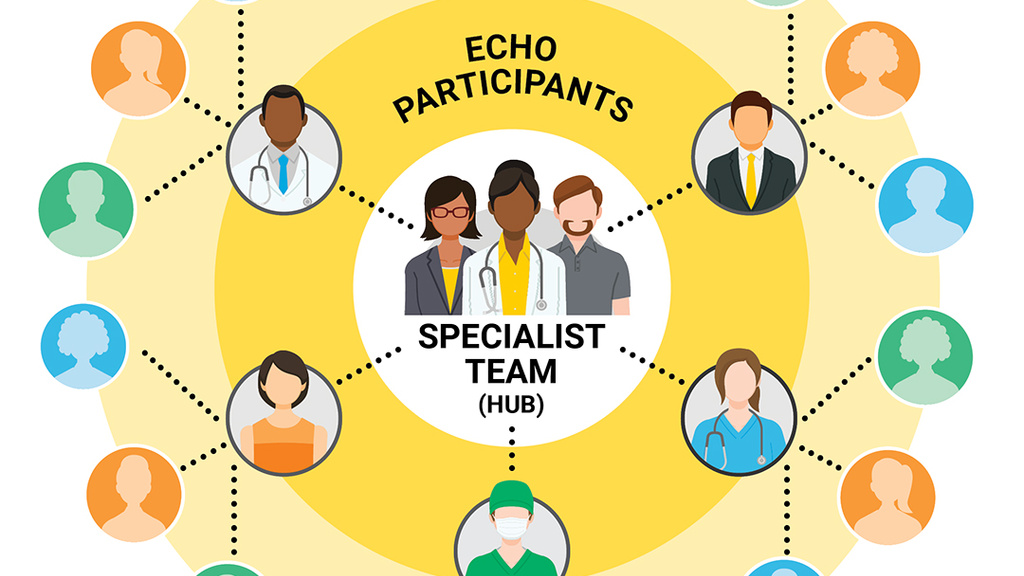
Their mission extends beyond patient care, says Alison Lynch, MD, director of addiction medicine at UI Health Care. By partnering with hospitals, correctional facilities, recovery organizations, and community programs, Lynch and her team are also helping local providers develop the skills and confidence to treat substance use disorders themselves.
“We invite local clinicians to sit in on visits, so they can see how to approach these conversations in a patient-centered, compassionate way and ultimately provide that care independently,” she says. “Then we can move on to another community and repeat the process.”
What is MAT?
Medication-for-addiction treatment, or MAT, combines medication with recovery support to treat substance use disorders and promote long-term recovery.

Meeting people where they are
Using opioid settlement funding from the Iowa Attorney General’s Office, the mobile clinic team — typically including Lynch or one of her addiction medicine specialist colleagues, a pharmacist, a case manager, a peer recovery coach, and a trainee — has been traveling to sites across southeast Iowa but plans to expand its reach in the coming years.
Team members screen for mental health concerns, assess substance use history, connect patients to recovery resources, address barriers such as insurance or transportation, and send prescriptions directly to local pharmacies. They also work with patients to develop goals.
“We help people apply for Medicaid, access clothing assistance for employment, apply for government phone programs, connect with housing resources, and more,” says Nicole Smith, program coordinator for the mobile clinic. “We treat the whole person. Wraparound services are a huge part of recovery.”
Although the opioid epidemic didn’t hit Iowa as early or as hard as some other states, access to treatment remains limited, particularly in rural areas. And for patients ready to seek help, delays of days or weeks can mean missed opportunities to begin recovery.
Lynch recalls one woman who arrived at the mobile clinic in crisis. Because treatment could begin immediately, she stayed engaged. Months later, she regained stable housing and custody of her child.
“We’re able to meet people where they are and get them started on treatment right away, instead of making them wait weeks or travel long distances,” Lynch says.
At a glance
- The UI Addiction and Recovery Collaborative (ARC) — also known as the UI Health Care Division of Addiction Medicine — started helping patients through its Medication for Addiction Treatment (MAT) Mobile Clinic in 2024.
- Over the past two years, the mobile clinic has served more than 100 patients in eastern Iowa, including those in Benton, Clinton, Johnson, Linn, Scott, and Washington counties. These patients have opioid, stimulant, alcohol, cannabis, and tobacco use disorders.
- Medications prescribed through the mobile clinic include buprenorphine (Suboxone®), naltrexone (Vivitrol®), acamprosate (Campral®), varenicline (Chantix®), and naloxone (Narcan®).
- The mobile clinic is planning further expansions.

“This is about partnership. We’re not trying to take over. We’re working with communities to build capacity and make sure people can get care where they live.”
A partnership takes root in Vinton
In 2026, the mobile clinic began partnering with Virginia Gay Hospital in Vinton, Iowa, a critical-access hospital that serves Benton County and surrounding rural communities. Hospital leaders had identified substance use treatment as a major unmet need but lacked the specialized expertise needed to build a program from scratch.
“This partnership with University of Iowa Health Care helps close that gap and bring care closer to home,” says Katie Cox, RN, BSN, director of ancillary services and community health at Virginia Gay Hospital. “Their expertise and passion are inspiring, and collaborating with them has been instrumental in launching our program.”
Through the mobile clinic’s monthly visits, patients are receiving immediate support, and Virginia Gay clinicians are learning from addiction medicine specialists through observation, consultation, and collaboration.
“The training, hands-on support, and overall collaboration have been tremendous,” Cox says. “It’s helping us break down silos and build a stronger community approach to care.”
Building local expertise
That educational component is central to the clinic’s long-term strategy. The goal, Lynch says, is not to create dependence on a traveling clinic but to help communities develop their own sustainable treatment capacity.
“Many clinicians aren’t comfortable addressing substance use because they haven’t been trained to have those conversations,” she says. “Over time, our partners will take the lead, with us supporting them until they feel confident enough to provide care on their own.”
Smith says communities are asking for clinician education. “We really focus on reducing stigma and helping providers learn how to talk about substance use and how to ask about it in a way that makes patients feel comfortable,” she says.
The work of UI addiction specialists is having a ripple effect. One example is former trainee Melinda Yehyawi, a physician associate who trained at Iowa and completed an addiction medicine fellowship that included assisting with the mobile clinic. Today she is helping meet a workforce need by providing addiction treatment services at two residential recovery programs in Linn County.
Serving people with addiction issues
In addition to serving individuals seeking recovery from substance use disorders at two on-campus clinics, University of Iowa Health Care offers comprehensive support to Iowans though multiple mobile clinic sites:
Cedar Rapids, Iowa (Linn County)
- ANCHOR Center
- Area Substance Abuse Council (ASAC) Heart of Iowa
- CRUSH Recovery Community Center
- Lary A. Nelson and Gerald R. Hinzman centers
Clinton, Iowa (Clinton County)
- Rediscover Recovery Center
Coralville, Iowa (Johnson County)
- Hope House
Davenport, Iowa (Scott County)
- Davenport work release center
- Humility Homes
Vinton, Iowa (Benton County)
Washington, Iowa (Washington County)
“Substance use is so criminalized in our society that a lot of people grow up viewing it in a very narrow or judgmental way, and the fellowship challenged me to examine my own assumptions,” Yehyawi says. “Once you start understanding the trauma and life experiences behind substance use, your perspective changes. Exposure and education help providers become more comfortable and compassionate.”
Fighting stigma with treatment
Those persistent misconceptions about addiction, Lynch says, present one of the largest barriers to care.
“A substance use disorder is a treatable medical condition, but it’s often viewed as a character flaw or a weakness,” she says, “and that stigma keeps people from getting help.”
Effective treatments exist and recovery is common, Lynch says. “The treatments work — some of them work really well — and yet so few people have access to them. When we connect people with effective treatment, you get to watch them rebuild their lives.”
Yehyawi has witnessed transformations firsthand.
“I was amazed at how effective Suboxone is for opioid use disorder,” she says. “People can truly get their lives back — and seeing patients stabilize and do well long term is incredibly powerful.”
Lynch adds that the clinic’s correctional facility partners also are seeing the benefits of medication-assisted treatment, noting that one had initially barred people from being on such medications and has since changed its policy. “Being on site helped build trust with staff and showed them how much of a difference treatment can make. Now they actively refer people to us for treatment.”
For Cox, the partnership is helping Vinton-area residents view substance use disorder as a health condition deserving the same attention as any other chronic illness.
“Anything we can do to reduce stigma, break down barriers, and let people know we’re here to help is important,” she says.
A model for rural Iowa
One van cannot solve Iowa’s addiction-treatment shortage on its own. But by bringing services directly to patients and strengthening local expertise, the clinic is creating a model that can be replicated across the state.
“This is about partnership,” Lynch says. “We’re not trying to take over. We’re working with communities to build capacity and make sure people can get care where they live.”
For communities like Vinton, it’s already making a difference.
“This partnership is helping to close the gap and bring care closer to home,” Cox says.