
After beginning her career as a speech-language pathologist and serving in the Iowa Air National Guard, Kenzie Theisen of Le Mars, Iowa, found a new calling helping patients through some of life’s most consequential moments.
Story: University of Iowa Health Care Marketing and Communications
Photography: Liz Martin
Published: May 13, 2026
Being there for patients on their best and worst days is what drives Kenzie Theisen to show up each and every day. As a graduate of the University of Iowa Carver College of Medicine, that has been Theisen’s North Star on her nontraditional path to a Bachelor of Science in radiation sciences.
Theisen’s passion for helping others started young. Growing up, she was close with a cousin who had Down syndrome, which got Theisen interested in working with people with disabilities. This carried over to high school, where she led an adaptive physical education program for students with physical and intellectual disabilities. Combining these experiences with her love for science, Theisen embarked on her first health care career as a speech-language pathologist (SLP).
As she pursued her education, Theisen also served for six years as an airman in the Iowa Air National Guard 185th Air Refueling Wing in Sioux City, Iowa. She credits the experience — during which she achieved the rank of staff sergeant — with teaching her leadership and conflict-resolution skills.
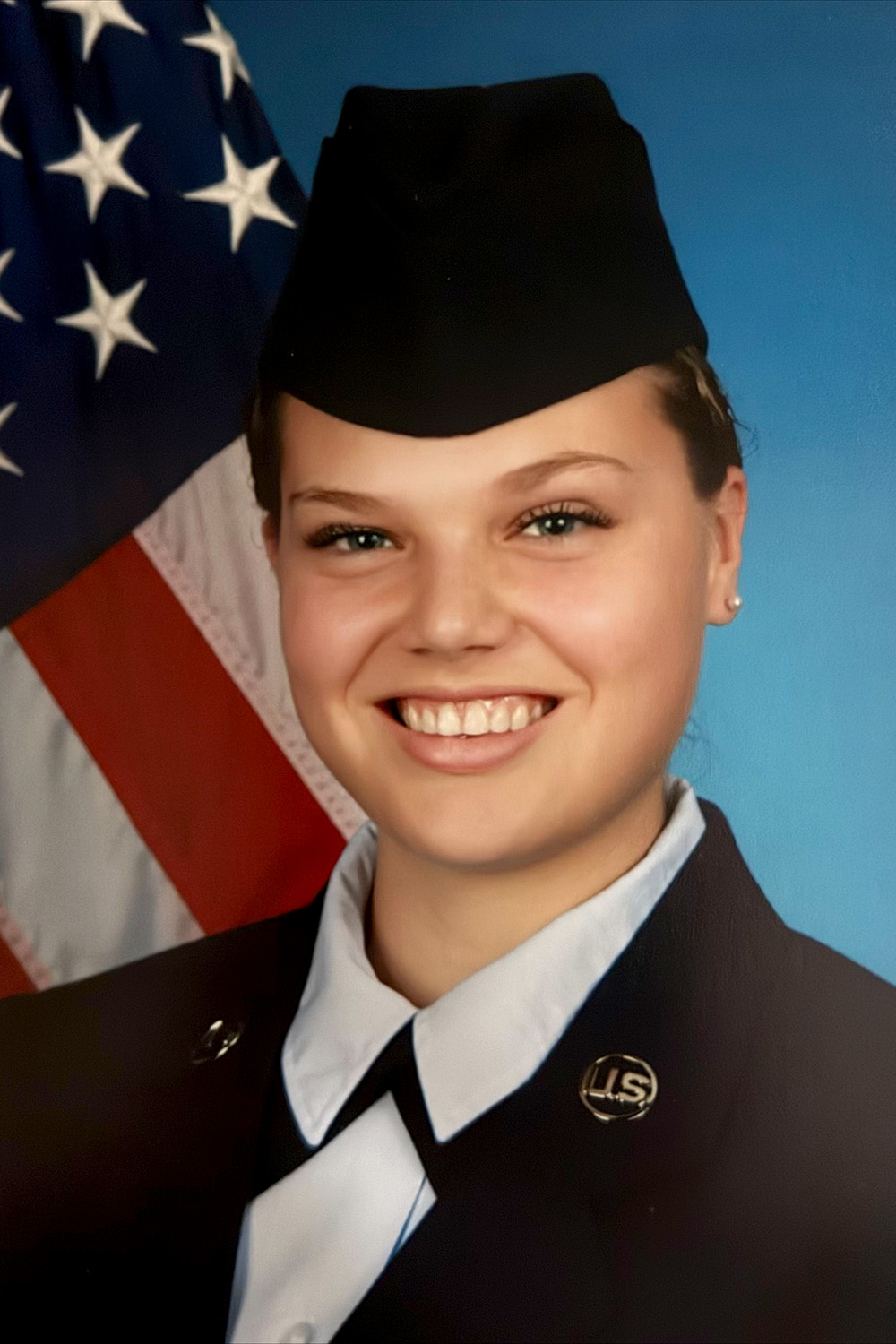
Kenzie Theisen
An inspired career change
After working as an SLP for two years, Theisen realized she was ready for a change. As a natural problem-solver, she found herself drawn to the diagnostic side of health care.
“I started researching going back to school, and I kind of stumbled upon sonography,” she says. “I thought it was the perfect match — being there for people on really hard days but also being an important piece of their journey in health care.”
Theisen applied for and was accepted into the competitive radiation sciences program within the Carver College of Medicine — one of only 20 in her cohort.
“I was really nervous and scared,” Theisen remembers. “I was 26 when I got accepted, and I had already done quite a bit of schooling for speech-language pathology. But having that background and experience having my own patients gave me a good base of knowledge to help me succeed in this program.”
The radiation sciences program is a bachelor’s degree program, but Theisen compares its rigor to a graduate-level program. She enjoyed the challenge and intensity of learning in her new career field.
“It's an incredibly rewarding field to be in, and very interesting. It makes all the work worth it,” she says.
During her first year of the program, Theisen continued to work as an SLP. She also waited tables on the side.
“As an older student, I have more responsibilities than some younger students,” Theisen says. “But I also have a lot of experience in what a full-time job looks like outside of school, which will be an advantage for me after graduation.”

“I thought it was the perfect match — being there for people on really hard days but also being an important piece of their journey in health care.”
Support through personal loss
Theisen’s goal to support patients through their best and worst days was strengthened by the support she herself received as a student. In January 2025, her junior year and first semester of clinical rotations, Theisen’s sister, Maddie, died. Theisen is forever grateful for the accommodation and support her cohort and program faculty members gave her during that time.
“My sister and I were really close,” Theisen says. “They checked in on me, they got me cards, and they let me talk about her. Everyone was very supportive. And that’s just how the program is, in general; we really lean on each other.”
Through the challenging time, Theisen found solace in focusing on the bright future ahead of her.
“School is something I really enjoy. It gave me something to focus on and brought me a little bit of joy during that time,” Theisen says.
Finding purpose in women’s health
Theisen’s clinical rotations piqued her interest in women’s health care. She credits Hannah Kelly, program director of diagnostic medical sonography, with exposing her to the field through her Foundations of Sonography class.
“We had the same instructors all three years, so we really got to know them,” Theisen says. “They’re very hands-on, which I loved. Everyone’s very supportive and kind, and they want you to succeed.”
During her first summer rotation, she performed ultrasounds on patients in the reproductive endocrinology and infertility clinic. During this rotation, she connected with people experiencing infertility, supporting them through the ups and downs the fertility journey brings.
"It can be really hard, but also, if we didn’t find this problem for them on the ultrasound, the patient wouldn’t know about it,” Theisen says. “Our job has a lot of importance, and it’s a lot of responsibility.”
After graduation, Theisen will work as a sonographer at UI Health Care’s university campus, working closely with patients experiencing high-risk pregnancies in the UI Department of Obstetrics and Gynecology and its maternal-fetal medicine division.
“I really love the hospital that we have here because you see it all,” Theisen says. “You get lots of great experiences, and you learn quickly. I know that will make me a great sonographer, and that’s what I want to be.”
Ready to apply?
Radiation Sciences professionals play a key role in the diagnosis, treatment, and research of disease and injury.


